
You’re racing toward the end zone, the ball tucked under your arm–when, out of nowhere, a defensive lineman from the opposite team slams you to the ground. It’s not just any tackle, though. You land awkwardly on your shoulder, and pain tears up through your arm. The athletic trainer confirms your fear: you suffered a shoulder dislocation.
Shoulder dislocations are fairly serious injuries that require immediate medical attention and comprehensive rehabilitation to ensure proper healing. At Rebound Rehabilitation, we regularly help athletes rehabilitate dislocated shoulders, and we wanted to share a bit more about what you can expect.
Understanding Shoulder Dislocations
Shoulders become dislocated when the upper arm bone (humerus) slips out of the shoulder socket. This can happen due to a fall, a direct impact, or forceful arm movement. Athletes in contact sports, such as football, basketball, or hockey, are at higher risk, but it can also occur in activities like swimming, gymnastics, and weightlifting.
A dislocated shoulder requires immediate medical attention to relocate the joint safely. However, proper rehabilitation is essential to restore function, prevent future injuries, and strengthen the shoulder. Physical therapy plays a key role in this process. We can also help you address risk factors to help you avoid a dislocated shoulder altogether.
Why Do Shoulder Dislocations Happen?
Several factors can increase the risk of dislocating your shoulder:
Weak Shoulder Muscles
- A lack of strength can make it easier for the joint to slip out of place.
Previous Dislocations
- A history of dislocated shoulders increases the likelihood of it happening again.
High-Impact Sports
- Activities that involve falls or heavy collisions put athletes at greater risk.
Hypermobile Joints
- Some people naturally have looser ligaments, making dislocations more likely.
The Role of Physical Therapy in Shoulder Rehabilitation
Physical therapy is crucial for managing a shoulder dislocation after the joint is put back in place. It helps athletes regain strength, mobility, and stability while reducing the chances of reinjury.
What To Expect From Physical Therapy
1. Pain Management and Early Recovery
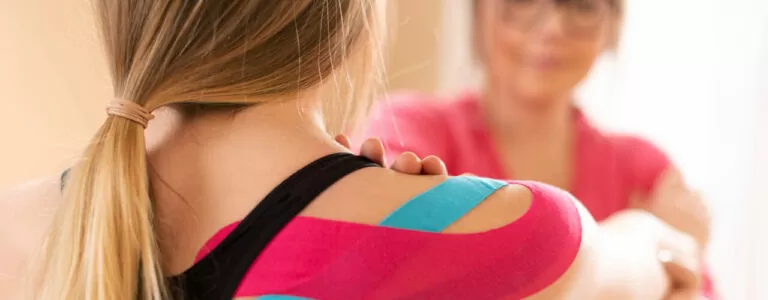
In the initial phase of recovery, physical therapy focuses on reducing pain and swelling, protecting the affected joint, and preventing stiffness. For example, you may need to use a sling for a few weeks after your injury, and we can help you do so correctly. We can also guide you through controlled exercises to manage pain and keep the shoulder from becoming too tight.
2. Restoring Range of Motion
Once your pain and swelling subside, we’ll introduce exercises to improve your shoulder’s mobility. We generally start with passive range-of-motion exercises (in which we move the shoulder for you) before progressing to more active stretches (in which you move the joint yourself, with or without assistance).
3. Building Strength and Stability
Regaining strength is essential to preventing another shoulder dislocation. We’ll design individualized exercise programs to fit your needs. For example, we might have you strengthen your rotator cuff muscles or work to stabilize the muscles around your shoulder blade.
4. Improving Function and Coordination
Once you’ve restored strength and mobility to your shoulder, it’s time to begin relearning more functional movements so you can return to your day-to-day life–and your chosen sport. We’ll guide you through drills to enhance shoulder control and prepare the joint for the demands of your sport.
5. Preventing Future Dislocations
A strong rehabilitation program reduces the risk of another dislocated shoulder. However, we’ll also share long-term prevention strategies, such as continued strength training to help stabilize the shoulder, proper warm-up routines, and biomechanical adjustments to help minimize shoulder stress.
Get Back in the Game with Comprehensive Care
Recovering from a shoulder dislocation takes time and guidance. Physical therapy plays a vital role in regaining strength, preventing future injuries, and ensuring a safe return to sports. If you’ve recently dislocated your shoulder and want to maximize your recovery outcomes, Rebound Rehabilitation is here to help. Contact us today to schedule an initial appointment.